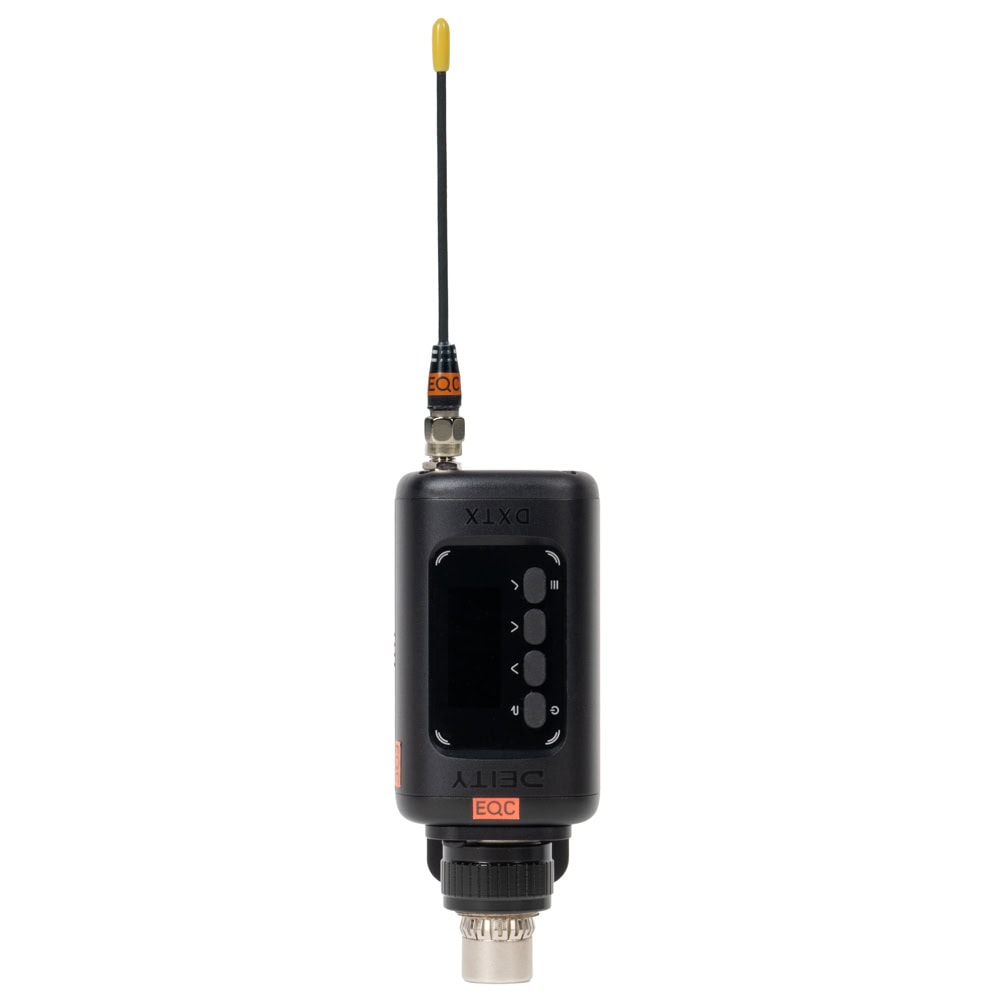
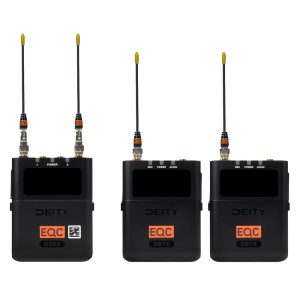
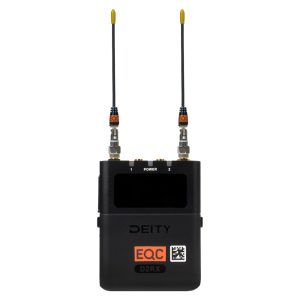
The Deity THEOS DXTX plugs straight onto the XLR output of a microphone and transmits its signal wirelessly to a THEOS receiver, such as the D2RX. Typical uses are a shotgun mic on a boom pole with no cable running to the mixer or camera, a handheld reporter mic for interviews, or an XLR source on stage. It can also record a backup to microSD at the same time, so an RF dropout won’t cost you the take.
Frequencies
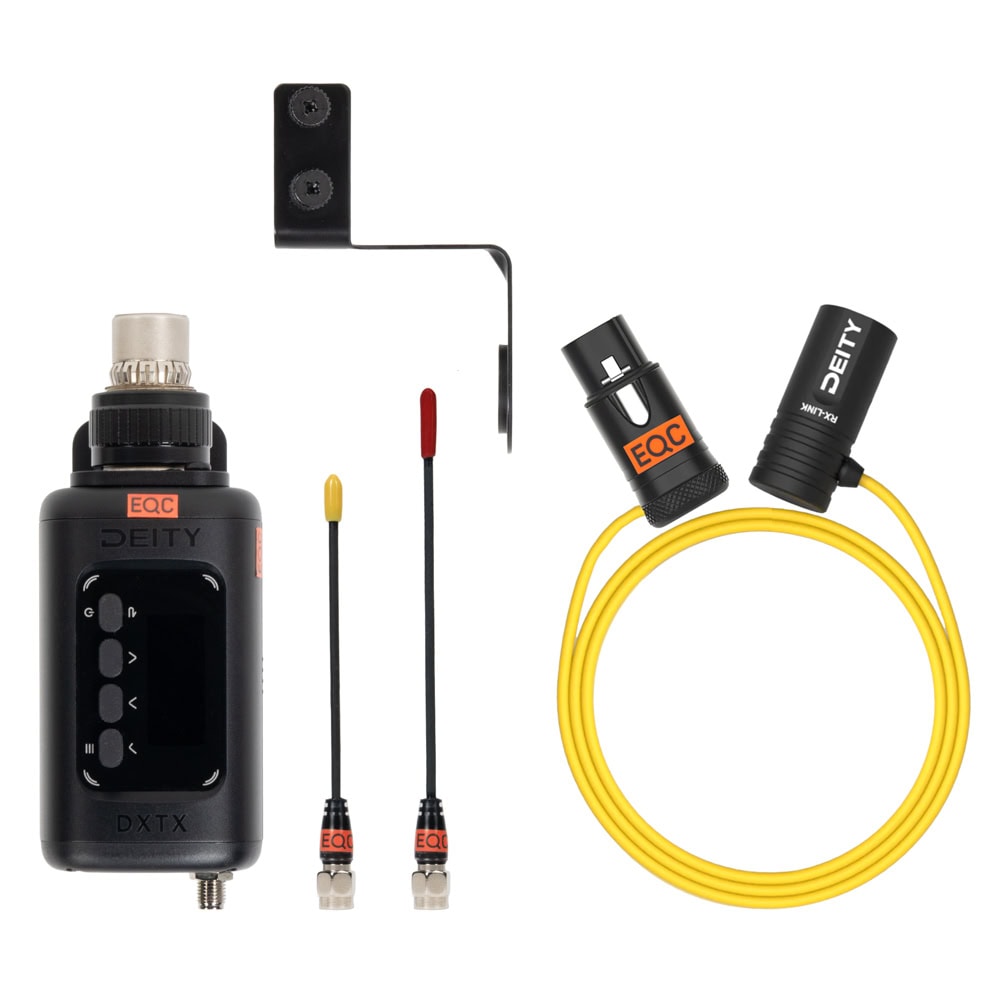
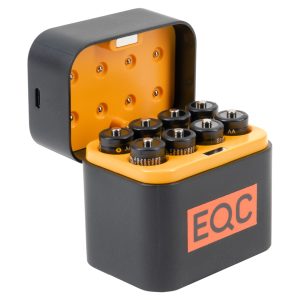
The kit includes two antennas, color-coded by the antenna cap:
- Red: best between 608 and 630 MHz, usable from 550 to 694 MHz
- Yellow: best between 733 and 758 MHz, usable from 694 to 790 MHz
If you want to work on a different frequency within the THEOS range, let us know when you book and we’ll give you the matching antennas.
Any XLR mic, from dynamic to phantom-powered
The locking Neutrik XLR input accepts dynamic mics, condenser mics with 48 V phantom power, mics that need 5 V bias, and line-level signals. Gain goes up to +42 dB, and an analog limiter catches peaks. You adjust it on the color screen or remotely via Bluetooth in the Sidus Audio app, which also scans for free frequencies and starts the backup recording.
Backup recording and timecode
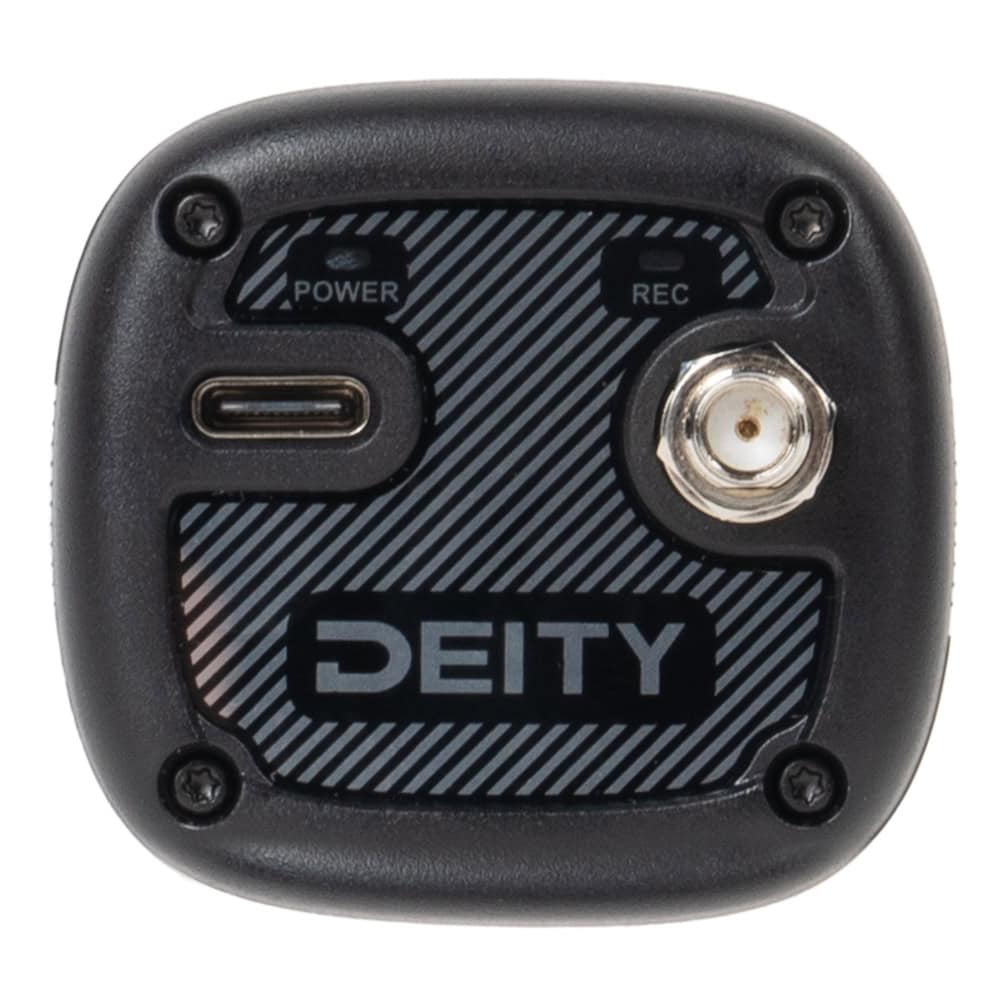
The DXTX records WAV files at 48 kHz in 24-bit or 32-bit float to microSD cards up to 128 GB. With 32-bit float, you can fix levels that were set too low or too high in post. The built-in LTC timecode generator writes timecode into the files. You can sync it via the app, from a Deity TC-1 or by cable. Recording can start on power-up, manually or as soon as timecode is synced.
On the boom pole
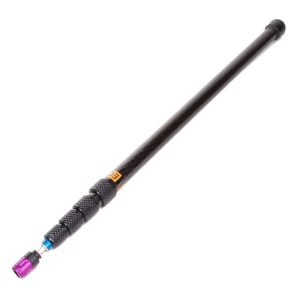
For boom poles without an XLR mount, the kit includes a boom pole bracket and a short XLR-Link cable. With batteries and antenna it weighs 228 g. With the optional 5-pin module it records stereo or two mics.
Power and range
Two AA batteries last over 8 hours with 48 V phantom power, and up to 14 hours with a dynamic mic at low RF power. Alternatively, power it via USB-C. The range is about 150 m at 50 mW.